

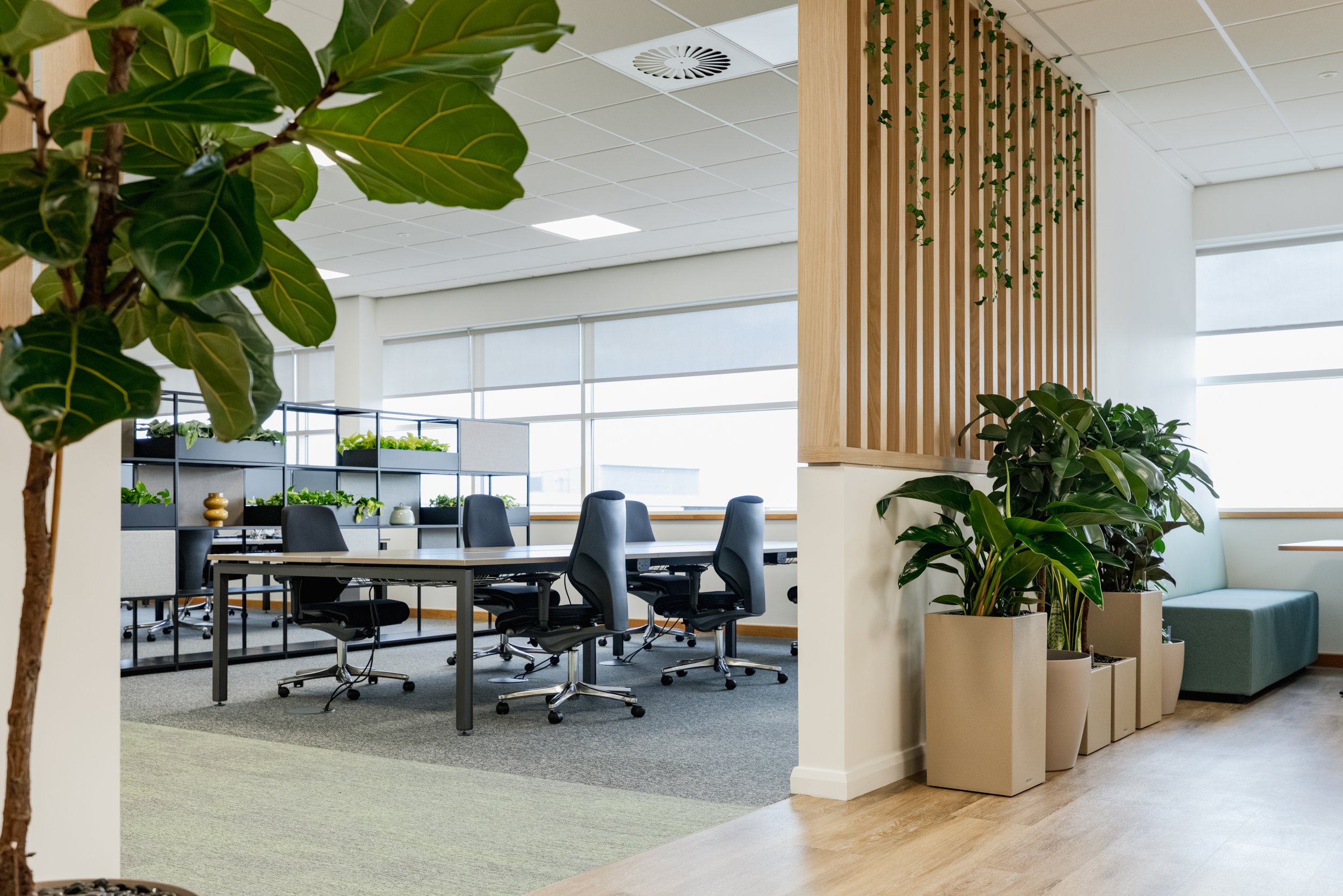
Welcoming the Chief Work Officer
We’re exploring the emerging role of the Chief Work Officer - what it means, how it sits, and the role it plays within business and society. We’re talking: impact on people, changes in how we work, and what it means for the future.
The world of work is changing, and fast.
With AI, automation, agents and a race to transformation seemingly taking place, we’re seeing it filter through to how we work, where we work, and the way we work - and how we collaborate is sitting right at the top of that list. Enter the Chief Work Officer, a role that you might recognise if it were titled ‘Chief People Officer’, but now there is room for AI to be a part of that equation.
Get to know the Chief Work Officer
The role sits inside the ‘people’ or ‘HR’ function, but straddles across to the operations side, too. An overarching role of sorts; we’re seeing this role grow in popularity, designed to bridge the gap between human workers, their workspace, IT and AI systems to create a business function and context that looks after the working relationship between these functions. There is a practical level to this partnership, of course, but also an ethical angle that needs care, attention, and boundaries; the Chief Work Officer may be in charge of workflows and workforce, but also the application of AI and how it sits within a business operationally, ethically, morally, and culturally.
But what about the people?
This is not the first evolution in this role or this space. HR shifted to become more about people, taking the functionality of the workplace away and re-humanising it through wording, language, and a shift to people rather than resource. Of course, that brought us the Chief People Officer and the people teams, a shift and a signifier that times were changing, and we find ourselves at that crossroads once again.
The Chief Workplace Officer.
But, where did the people go in all of that?
The people function within a business has shifted in the last decade or so to champion wellbeing as well as work, bridging the gap between personal and professional life, deploying strategies within the office to help those people truly thrive. That isn’t going to change as the language shifts, and people will still remain the centre focus; from what we have experienced and seen so far, the Chief Work Officer role will exist to protect human workers as well as fostering the collaboration and conversation between them, each other and their AI agent counterparts, the role is expanding, evolving, even, rather than changing completely.
The way we work is evolving
While the function isn’t changing, the way we work is.
Hybrid-offices, AI agents, working patterns that we couldn’t have predicted five years ago let alone 50, and so, businesses must move with the times. The physical workplace used to be where we spent what some would call an inordinate amount of time, shuffling and juggling our life commitments around the hours before and after clocking in and clocking out.
But hybrid work has reshaped how we work, how we collaborate, how we make decisions for our businesses, how we prioritise, and evidently, how we hire.
Work looks and feels very different, with organisations working to pivot to reflect the world we find ourselves in, to streamline operations, to give teams more autonomy along with automation, and to shift to a new way of thinking that is still evolving by the moment.
How we converse, collaborate, and congregate has been altered with the arrival of AI, and so our spaces, places, and mindsets have needed to shift as well.
Spaces now must live a thousand lives
Before an office was the epicentre of a business, so much so that it didn’t really matter what it looked or felt like for the most part. It just was, no questions were really asked. Now, offices are the beating heart of a business, an extension of the brand and team, with all eyes on how it looks, feels, and performs for the team. Another shift in culture.
But, due to hybrid working, these spaces are rarely used and occupied for five days a week, which feels like a crying shame for the four walls that have been so lovingly poured into - but it means it matters even more how it is designed so it is also desired.
When searching for a space, that Chief Work Officer is no longer just looking for a space to house a set amount of desks for the next 10 years, they are looking for culture, for collaboration, and a space that may realistically be a shorter term solution, existing in a vacuum and serving a very specific purpose than becoming a permanent home for a business to grow and thrive.
An office is no longer simply a place of work, for one it has to be desirable to combat the work-from-home culture we find ourselves in, but we cannot forget about the real-world necessities, obligations, and constraints that come with choosing and committing to a physical office space. Especially being as a typical commercial lease is now renegotiated or exited after only 2.5 years - a fleeting moment in time to make an impact, make a difference, and build a business that can stand on its own two feet.
The shortening of the lease is a result of many things, but AI becoming such a prevalent part of businesses is one of them. The pace has changed, the game has changed, and the playing field is almost unrecognisable to what it once was, but still businesses are choosing physical spaces, there is just a bigger spotlight on employee experience this time around.
On the subject of work-from-home, there is a pressure to bring employees and teams back into physical spaces. Easier conversations, better workflow, closer collaboration, and a space for junior staff to be supported, seen, and nurtured. But, when work-from-home feels and seems so appealing, there has to be a reason, a draw, and a need for in-office working, and a lot of this comes down to how we feel and experience a space when we are in it. From the amenities and the quality of the coffee, to the environment in the lighting and soft furnishings, all make up part of the picture and a space being not only usable, but the preferred option.
Spaces designed with people in mind, spaces that are designed to live a thousand lives, and spaces that are lived in but easy to exit, or change when the time comes, taking what they need and leaving what they don’t - spaces that are treated as a rental home rather than an owned home, but they want a home nonetheless.
We know these changes mean that decisions are changing. Instead of a few big choices when finding a work space and place, they are now made up of a multitude of microdecisions, all seeming as big as each other and having a knock on effect later down the line. No longer are spaces solely for humans, but they are for optimisation, future-proofing, and shaping a new kind of working - all while making sure the space is cognisant of its impact, forever an act and art of juggling people and planet while maintaining value. Lumybel’s mission is to support businesses navigate the complexity of this changing world.
The future looks bright
As the world of work shifts on its axis, we anticipate and respond. Businesses shift their thinking, we shift our way of building, and we continue to design for the people who will call those spaces home. The Chief Work Officer may be a new title but the crux of the role remains the same, and it will always still be about people - just more cognisant of what they work with as well as who they work with.
Staying human
At Lumybel, we create spaces for the people who are going to use them. Commercial fit out is such a core part of shaping our working worlds and environments - from the complex, capital-hungry Building Services and Plant, through design of the layout, the carpet tiles, and on to the coffee machine in the kitchen and every single decision in between. We recognise the need for design and delivery that puts people first, conscious of the planet, always shifting, growing, and evolving as the world spins and the sun continues to rise, and we work with Chief Work Officers and Chief People Officers, and their professional teams, lending each project our insight and experience to bring those visions and decisions to life, together.
Thoughts?
Get in touch with your thoughts, feelings, where you sit and how you stand on the future of work and the CWO role.